Compare Hotels

Save on your hotel - www.hotelscombined.com

Thursday, June 30, 2016

Athens Acropolis Museum - Dodona: The oracle of sounds exhibition

The Acropolis Museum started in 2015 a series of temporary exhibitions displaying important ancient artifacts, deriving from significant archaeological sites of the Greek periphery. The Museum’s goal is to present unusual subjects that will intrigue the current visitor and at the same time urge him to visit the places the exhibits originated from.
The second exhibition of the series concerns the Oracle of Dodona and it will open on 20 June 2016 and last until 10 January 2017. The exhibition aims at providing wider knowledge about the oldest Greek oracle, tracing the way it functioned, its role and importance in the ancient world, and at the same time showcasing the human need to predict the future.
The exhibit’s narration begins with Dodona during the late Bronze Age. Clay and bronze artifacts illuminate the identity of the first inhabitants, the primitive cult of Mother Earth (Earth Goddess) and the establishment of Zeus’ cult. The main interest in the exhibition lies in Zeus and his predominant presence in the sanctuary. The central theme is the prophetic oak tree that with the rustle of its leaves would answer the agonizing questions of people of what lies ahead. Prophecies were also given by priests who de-coded the sounds of bronze cauldrons and the cooing of pigeons. The excavations conducted in Dodona have brought to light some thousands of questions carved in metal sheets of lead, posed by visitors in the sanctuary. Some of these questions concern matters of trade, debts, assets, court decisions, health, fertility, upcoming marriage, dowries and widowhood and are presented in a separate unit of the exhibition. From the dedications in the sanctuary parts of bronze statues, parts of armory, swords and part of their suspensions, dedications from those who benefited from the gods or invoked their help are also displayed. Moreover, characteristic coins highlight the political aspect of the Oracle and its connection with Pyrros, the King of Epirus. Lastly, the relationship between the city of Athens and Dodona is presented by two exhibits from the Acropolis Museum.
The exhibition will be accompanied with a scientific catalogue of the items on display. On a big screen of the exhibition area a video presentation will provide information about the Oracle and the natural environment surrounding it.
During the exhibition, the Museum’s restaurant will offer treats from Ioannina.
The exhibition is conducted with the collaboration of the Acropolis Museum and the Ephorate of Antiquities of Ioannina. The exhibits are on a loan from the Ioannina Museum and the National Archaeological Museum, Carapanos Collection.
Source: http://www.theacropolismuseum.gr/en/content/dodona-oracle-sounds 

Friday, May 13, 2016

Thasos Island. A secret paradise for your holidays!

Thasos or Thassos (Greek: Θάσος) is a Greek island, geographically part of the North Aegean Sea, but administratively part of the Kavala regional unit. It is the northernmost Greek island, and 12th largest by area. Thasos is also the name of the largest town of the island (officially known as Limenas Thasou, "Port of Thasos"), situated at the northern side, opposite the mainland and about 10 kilometres (6 mi) from Keramoti. (source wikipedia.com)


How to get there:

Kavala Airport is the most convenient airport in order to be close to Thasos but most of the times the flight prices are extremely expensive. Then from here you should drive to Keramoti or to take a taxi to drive you to Kavala port, then take the boat and travel to Thasos. Thasos island requires a car if you want to explore it. Public buses are not convenient.  An alternative way is to flight to Makedonia International Airport (Thessaloniki) and then to drive to the previous mentioned ports. 

Thasos is serving by 2 ports. More specifically: 
  1. From Keramoti port to Limenas Port (Thassos Town) is the shorter, faster, cheaper, more popular and most frequent route with a journey time of just 40 minutes.
  2. From Kavala port to Skala Prinos Prinos at the west side off the island

Wednesday, May 11, 2016

New Airline Company "Germania" flies direct to Greek Islands from Switzerland and Germany

Pontikonisi
Germania Flug AG is a new Airline Company, headquartered in Glattbrugg near Zurich was founded in August 2014. The goal was to introduce a high-quality product that meets the needs and requirements of the demanding Swiss market. The Germania Fluggesellschaft mbH has been known in the German and other markets for almost 30 years for its premium service, excellent quality and high level of safety and reliability. The same concept of values is important for Germania Flug AG in the Swiss market.


Both Companies serves direct flies mainly to Crete/Heraklion, Corfu, Kos, Rhodes and only from Hamburg Airport there is a direct fly to Santorini - Thira. 

For more information I provide you below the flights per departure airport! Enjoy and do not forget to compare prices at Skyscanner.com


Germania Flug AG offers direct flies to Greece. Here are the details:

From Zurich Airport (ZRH) direct flies to:
1. Crete/Heraklion (HER)
2. Kos (KGS)
3. Rhodes (RHO)

Germania Fluggesellschaft mbH offers direct flies to Greece. Here are the details:

From Bremen Airport (BRE) direct flies to:
1. Corfu (CFU)
2. Crete/Heraklion (HER)
3. Kos (KGS)
4. Rhodes (RHO)

From Dresden Airport (DRS) direct flies

Tuesday, May 10, 2016

Greece among the top countries of the Trip Advisor Travelers Choice 2016 Awards!

Again this year Greece is among the top 10 countries based on the Trip Advisor Travelers Choice 2016.

More specifically here are the categories:

1. Top 10 Islands — World: Santorini holds the 2nd position. 


Some things to do in Santorini:
1. Hiking Trail Fira - Oia
2. Visit Akrotiri Archaeological Site
3. For those who loves wines do not forget to visit Santo Winery
4. Eat fresh fish at Amoudi Bay (under Oia)
5. Visit the Red Beach (Akrotiri Area). Take with you good shoes - no flipflops!


2. Top 25 Beaches - Word: Elafonissi Beach (Crete) holds the 13th  position


Some things to do in Elafonissi Beach:
1. Visit the Chrisoskalitissa Monastery
2. Suitable for those who loves serf!
3. Elafonissi Island is a Natura 2000 protected area.
4. Ideal for children. Near the “breaking” point of the peninsula, the water does not exceed 1m, creating a small lagoon.
Elafonissi is located 76km west of Chania and 5km south of Chrysoskalitisa Monastery, in the southwesternmost point of Crete.


3. Top 25 Hotels - World. In this category there are 2 Greek hotels:

On the 5th place is the "Achtis Hotel".
Achtis Hotel is a boutique hotel in Afytos village, Halkidiki - Kassandra area. The space is dominated by stone constructions with traditional materials and fine furniture’s. The design of the facilities and the range of services aim to comfort convenience and relaxation for vacation. The hotel is available 24 hours, offering information about accommodation and movement.

To find the best prices for booking a room in Achtis Hotel click here


On the 12th place is the "Canaves Oia Hotel". Canaves Oia Hotel is in Santorini - Oia village. Ir is one of the most luxury hotels in Santorini. Inviting, inspiring and elegantly classic suites and contemporary facilities, entice guest to experience luxury accommodation beyond comparison in the best luxury hotel in Oia Santorini. All hotel suites are freshly renovated and elegantly decorated in a dazzling white, minimal manner, featuring private verandas, al fresco dining areas and breathtaking views to the Caldera and the Aegean Sea.

To find the best prices for your accomodation in Canaves Oia Hotel click here

Monday, May 9, 2016

Qatar Airways: Special flight offers from Athens until today!!!!

Qatar Airways announces special offers that end today, 9th of May 2016, flying from Athens to many international destinations among them Abu Dhabi, Bangkok, Beijing, Cape Town, Dubai, etc.

Travel duration: Form 9th of May 2016 - 5th of May 2017.

Prices starts from 360 Euro. More info here: http://www.qatarairways.com/gr/el/special-offers.page?

Edelweiss Airlines flies direct from Zurich to Crete!!

Edelweiss Airlines announces direct flights from Zurich to Crete and mainly to Heraklion, Kazantzakis International Airport.


Edelweiss Airlines flies five times a week and during the high season (May to October) daily directly to Heraklion. Prices starts from CHF 249. 

Crete is a spontaneous getaway! Find your best hotel in Crete.


Sunday, May 8, 2016

Hellenic Seaways announces the Thessaloniki - Sporades route

A fast connection between Thessaloniki and the Sporades islands will begin on 16th June 2016 and wil be operating until 25th September 2016.

Hellenic Seaways, in response to passenger requests, will be operating this route withFlying Cat 4, a fast catamaran type highspeed vessel which can accommodate up to 440 passengers and reach a speed of 40 knots, completing the journey between Thessaloniki and the Sporades islands in less than three hours.

More specifically, the route will operate 7 days a week, departing Thessaloniki at 09:00 and reaching Skopelos, Alonnisos and Skiathos. The return journey will take place daily at 19:10,  arriving at Thessaloniki at 22:45. Every Friday, Saturday and Sunday a stop at Glossa port in Skopelos will be included in the itinerary.

Mr. A,. Agapitos, C.E.O. of Hellenic Seaways, on the occasion of the launch of the route, said: " We are happy to be reopening this route after two years and hope that Greek as well as international travellers will be taking advantage of the daily connection between Thessaloniki and the Sporades islands, both for day trips and for longer stays. We are working together with Thessaloniki authorities to increase the connectivity of the second largest Greek city with the islands of the N.E. Aegean with fast, safe and luxurious boats that offer the high quality services for which we continually strive."


Friday, May 6, 2016

Two Athens eateries among 31 places to 'eat at before you die'

An Exarchia eatery where waiters invariably forget some part of an order and a restaurant in Metaxourgeio where no dish ever exceeds 7 euros are among “31 places around the world you should eat at before you die," according to BuzzFeed. The popular news and entertainment website recently asked a group of professional globetrotters to share their favorite culinary destinations around the world.
Jess Brammar, senior broadcast journalist on the BBC's “Newsnight” program, singled out Ama Laxei in Exarchia, central Athens, where, she writes, “the food is amazing – traditional Greek with a modern twist, lots of salads and plates to share.”

Although Brammar points out that the service leaves a lot to desire, she adds, “When you are sitting in an Athenian courtyard at midnight drinking wine and laughing with friends, who cares?"
When in Athens, Guardian feature writer Jon Henley visits Seychelles, a no-frills, price-is-right restaurant in Metaxourgeio. “The food is Greek with a slight but inventive and hugely satisfying twist, and its quality is astounding,” says Henley, who mentions juicy lamb cutlets with thyme and grilled vegetables with a “just-right” fig sauce among his favorite platters.
Covering the globe, the BuzzFeed list also showcases Umm Hagar in central Cairo, where the lucky diners to get the one single table at the restaurant get to savor whatever the cook feels like preparing on the day, Armand's, a small bistro on a Phnom Penh side street, where dishes include a tenderloin Rossini with foie gras, south Indian cuisine at Vijay's, northwest London, where platters include green mango prawn curry, as well as the two-Michelin-starred Don Alfonso 1890, an Italian restaurant overlooking the stunning Amalfi and Sorrento coasts where beef fillet in puff pastry with buffalo mozzarella is among the favorites.
Source: Kathimerini Newspaper

Direct Delta Airlines flight linking Athens with NYC

Delta Air Lines will inaugurate a direct flight linking Athens International Airport with JFK Airport in New York City, beginning on Tuesday, April 5.
Delta is celebrating its 25-year presence in Greece this year, having transported some 1.5 million passengers between Athens and the United States since November 1991.
One flight per day is scheduled until June 17, followed by two flights per day during the peak summer season until the end of September 2016.
A permanent direct air link between the Greece and the United States has been a standing desire of tourism professionals in the east Mediterranean country as well as the significant Greek expatriate communities of North America.  
Source: Naftemporiki Newspaper

Tuesday, May 3, 2016

Additional flights and carriers to inaugurate tourism season in Messinia prefecture

Nine new air routes to and from Kalamata’s “Kapetan Vassilis Konstantakopoulos” and an additional two carriers are the latest additions to the burgeoning tourism sector of Messinia prefecture, in extreme southeast Greece.
Specifically, and beginning from April, British Airways will inaugurate two flights a week from London Heathrow on Thursday and Saturday; Vueling will service a route every Friday to Rome Fiumicino, while Aegean Airlines will inaugurate six routes from Milan (Tuesday), Copenhagen (Monday), Billund (Monday), Paris (Tuesday), Lyon (Tuesday) and Nantes (Saturday).
Messinia prefecture, which includes Kalamata, Pylos and the internationally known Costa Navarino resort, often inaugurates the holiday season in Greece, with Aegean Airlines flights arriving from Munich, Dusseldorf, Stockholm this month.

Source: Naftemporiki Newspaper

Chalkidiki increasingly attractive for Scandinavian tourists

Tourist arrivals to Greece from the lucrative Scandinavia market are expected to increase by 4-5 percent this year, according to initial estimates collected during the "Grekland Panorama" exhibition last week in Stockholm.
The exhibition was supported by the Greek National Tourism Organization (GNTO).
One destination that stood out at this year’s tourism fair was Chalkidiki prefecture (Halkidiki) in northern Greece, according to tour agency representatives on the sidelines of the exhibition.
Greece is ranked seventh in terms of Scandinavians' tourism preference.

Source: Naftemporiki Newspaper

Monday, February 15, 2010

Easter in Corfu

The whole of nature is dressed in green and fragrant with the scent of blossom, the spectacle in the streets and squares is unique. Orthodox customs meet Venetian traditions and feelings soar to the sound of brass bands and pottery smashing to the ground in the Spianada. Even if you spend Easter in Corfu just once, you will truly feel what genuine religious grandeur really means.

Easter Week begins with the Palm unday procession of the relics of St Spyridon, in commemoration of a miracle he performed in 1630, saving the city from the plague. The procession starts from "t'Agiou" church at I I am and follows the line once formed by the old city walls. At noon, the traditional "stakofisi" appears on tables in homes and tavernas: this dish, its English origin reflected in its name (=stockfish), is a stew of dried fish (usually cod) with potatoes, garlic, pepper and lemon. Holy Week services are observed with profound reverence in all village churches as well as in the town. Some churches have excellent Byzantine choirs: Ai Giannis at Plokada t'Agiou, the monastery of St Euphemia at Mon Repos, the Platytera at Mantouki, Agioi Theodoroi at Garitsa, and the Mitropoli (Cathedral). On Holy Wednesday the Municipal Choir gives its customary concert of ecclesiastical music at the Municipal Theatre in town.

On Holy Thursday in some villages the peasant women take yarns to church with them and braid ribbons during the long hours of the liturgy, while in the Duomo (the Catholic Cathedral) the congregation light twelve candles, blowing them out one by one after each gospel. In town, on Good Friday, you don't know which Epitafios (a symbolic bier, decorated with flowers and bearing an embroidered image of Christ in the tomb) to watch first. From 2 pm when the churches of the Spiliotissa and the Pontokrotor bring out their epitafios until 10 pm when the epitafios from the Mitropoli appears, dozens of processions fill the streets, accompanied by bands. The Old Philharmonic (the red band) plays Albinoni s Adagio, the "Mantzaros" (the blue band) plays Verdi's Funeral March, and the "Kapodistrios" band plays Marianis Sventura and Chopin's Marche Funebre. On Holy Saturday the city wakes early. At 6 am the church of Panogio ton Xenon stages a recreation of the earthquake that, according to the Scriptures, followed the first resurrection. Next, at 9 am, comes the Procession of St. Spyridon, displaying both the relics of the saint and the epitafios of "his" church and accompanied by bands playing Michellis Calde Lacrime, Faccio's Hamlet and the Funeral March from Beethoven's Eroica. The custom dates back to the Venetian period, when processions were banned, save for the relics of the saint. Two hours later, at I I am, mourning gives way to mirth, and the music is replaced by the noise of breaking pottery. With the First Resurrection comes the revival of the custom of botides: throwing narrow pottery jars off balconies.

Some say that this custom is of Venetian origin (the Venetians used to throw out old objects on New Year's Day so that the New Year would bring them new ones), and others that it is pagan (the breaking of jars symbolises the welcoming of spring and the new crop that will be gathered into new jars). Then the bands take to the streets again, playing a cheerful march entitled "Greeks, fear not", and the people pour into the Pinia (Vrachlioti Square) for the custom of mastela: throwing a coin into a barrel set up for the purpose. When the bells ring in the Resurrection, someone is bound to jump in to harvest the bounty. On Holy Saturday evening the town celebrates the Resurrection twice: first at the Catholic Cathedral and then at the church of Agia Paraskevi at the Upper Square bandstand. Drum rolls, fireworks and brass bands create a festive atmosphere, while thousands of people watch the show from the square, the adjacent streets and the balconies. The Easter supper that night includes tsilichourda (the traditional Easter soup), red eggs, fogatses (a Venetian-style brioche) and kolompines (Easter rolls in the shape of doves made from leftover bits of dough from the fogatses), which are decorated with a red egg and dyed chicken feathers.

On Easter Sunday, at 7 am, there is a procession of the icon of the Resurrection at every church in town. At noon comes the traditional spit-roast lamb, accompanied by spit-roast intestines (chordes) and a flurry of traditional Easter wishes. Some people like to keep their lamb for Easter Monday, and dine instead on egg/lemon soup, but everyone cracks red eggs with his neighbours, keeping the shells in the house for luck or scattering them on the fields to bring a good harvest.

Do not Forget:
If you want to spend Easter in Corfu, you have to book well ahead both your accommodation and even your restaurant table. If you plan to watch any of the Holy Week activities (the Epitafios procession, the Resurrection or the botides on Holy Saturday morning), then be sure to arrive early - the crowds are enormous and there is very little parking. Also remember that the timetable is strictly adhered to, so if you want to be there to see the smashing of the pots then you have to be, at I I am exactly, at one of the following points: Upper or Lower Square, Dimarcheiou Square, Plakada t'Agiou, the corner of Palaiologou and Nik.Theotoki St., the corner of M.Theotoki and N.Theotoki St., Porta Remounda-Guilford Street.

Easter in Greece

These are customs related to the religious holiday of Easter which is the biggest celebration of the Orthodox Christians and the one richest in folklore. The word “Pascha”, Easter in Greek, stems from the Jewish “Pasah” which means “Passover”. Jewish people celebrated “Pasah” to commemorate their liberation from the Egyptians and the passage of the Red sea, while Christians celebrate the resurrection of Christ the Saviour and the passage from death to life. The corresponding Greek word for “Pascha” is “Lambrí” (Brightness) because the day of the resurrection of Christ is a day full of joy and exhilaration.
Easter is a moveable holiday. Its celebration falls on the first Sunday after the full moon of the spring equinox. All over the country a plethora of customs and traditions are observed during the week prior to Easter (Holy Week).
The preparations for the celebration of the Resurrection start on Holy Thursday. On that day housewives traditionally prepare tsourekia (sweet buns resembling brioche) and colour eggs with special red dyes. Ever since antiquity the egg symbolises the renewal of life and the red colour symbolises the blood of Christ. In the past, people used to place the first red egg on the icon stand of the house in order to cast out evil spirits. In some villages they used to mark the head and the back of small lambs with the red dye used for the dyeing of the eggs. They also used to keep one of the big round Holy Thursday loaves at the icon stand in order to protect the members of the family from spells.
Friday is the most sacred day of the Holy Week, the day of the culmination of the passion of Christ with the deposition from the cross and Christ’s burial. Because it is a day of mourning, housewives do not do any house chores, avoiding even cooking. Women and children go to church to decorate the Epitaph (Bier of Christ) with flowers they collect or buy. In the morning of Good Friday, Christ’s Burial is reenacted in church and in the evening the Epitaph procession takes place.
On Easter Saturday morning, preparations start for the festive dinner of the night of the Resurrection and housewives cook “maghiritsa” (a tripe and herbs soup). Shortly before midnight, people gather in church holding white candles which they light with the “Holy Light” distributed by the priest. When the latter chants “Christ is risen” (Christós Anesti), people exchange wishes and the so-called “Kiss of Love”. With the “Holy Light” of the candles they thrice make the sign of the cross on the door post over the front door of their houses for good luck. Then they allgather around the festively laid table, they crack red eggs and feast on the traditional “maghiritsa”.
On Easter Sunday morning, in many parts of the country lamb is prepared on the spit. In other regions, the meat for the Easter table - lamb or kid - is roasted in the oven. There is a festive atmosphere everywhere and people eat and dance usually until late into the night.
All over Greece Holy Week and Easter are celebrated in great splendour and devoutness.
(Post content from eot.gr)

Thursday, July 23, 2009

Islands near Lefkada

Small green strips of land in the shadows conceal their famous stories, personal memories. Meganissi, Madouri, Scorpion, Skorpidi, Sparta, Thilia, Kalamos, Kastos are only some of the islands of Lefkada. Although the sea «plays» between islands and mainland all share stories of personal, humble and glorious moments.

Meganissi

Most of the cluster of islands Tilevoidon, 4n.m. from the southeast coast of Lefkada hides three beautiful traditional villages. Vathy, Katomeri and Spartochori, hosting approximately 1000 residents. Vathy has a daily connection to Nidri Lefkada and apart from the small harbor with fishing boats and restaurants, it can walk inside the door that separates their homes.

At the edge of the village church is St. Vissarionas. From here begins the road to the beach Fanari in Atheri Bay, the port of Katomeri other settlement. The Spartochori with the best view over the harbor Spilia.
On the west side of the island St. John, a church next to the sweetest homonymous beach with olive groves. More on the way to meet the Spartochori. Katomeri rural village with olive groves and vineyards, has stone houses, the last century ..

St. John, the Spilia the Pasoumaki the Ampelakia the Fanari, the Lighthouse, the Limonari the Olive, the Loutrolimni and Bereta are among the most famous beaches. From churches stands the small monastery of Agios Ioannis Prodromos built on the west coast, from 1477, according to tradition. On the narrow strip of land in the southern part of the island, 9km easy path leads to the famous Cave of Papanikoli a sea cave in the southwestern tip of the island in depth about thirty meters and sand at the inside.

Tradition says it was one of the cache of the submarine to Papanikoli do not identify. Also noteworthy are the caves and cave Giovanis, cave Diabolos. The island is equipped with tourist villas, boarding houses and taverns in the northern part of the island.

Kalamos

Several miles south of most other islands of Lefkada, Kalamos lies with the Kastos Echinos islands, deserted island in a cluster starting from the beech near the lagoon Etoliko. Island resident all year and is the second largest island of Prigkiponison. Cars do not move, restaurants, rooms make you asking what they are and free camping are accepted.

The few square kilometers are in a unique decoration, with arbutus laurels, olives predominant dense, live, from the pine forests rarely. Inside are four settlements. The only road leading to the Diocese, the second settlement. A few houses and a small harbor.

Near the village of Castle with «Kastromonastiro» with unique segments of the remnants of tall stone walls with the beautiful interior arches, which are external battlements. It is said that the castle is buried the mother of the great fighter of 1821, George Karaiskaki. The trail makes a tour around the island leads to the cape Kefali in southernmost tip.

Kastos

Shadows of olive groves, close relationship with the mainland, with access by boat from Mytikas Etoloakarnania and all the other waiting to see a sea gull. The Kastos the most «landlubber» from the cluster of islands in the low hills of the roots of thousands of olive trees. Ampelakia, Seaweed, Valia, Valley, St Emilianos Fokotrypa to a cave deep in the sand and 30metron home, Lake, furnaces, the beaches of the tirade.

Kastos The village is built around the harbor with houses hosting the few inhabitants. For the large church of Agios Ioannis Prodromos 19th century frescoes in the great vaults of painter Spiridon Gazi.

Four kilometers from the village church of St. Emilianos and perennial Kalikerimiou of olive grove. The only natural bay on the west side of Kastos is Sarakiniko is safe anchorage. Info will stay in the community take Kastos 26460 91484.

Wednesday, July 22, 2009

Parga - Syvota Photos

From my one week summer holiays I present you some of the most wonerful greek beaches

Parga - Valtos Beach


Syvota - Bella Vraka Beach


Syvota - Mikri Ammos Beach


Parga to Syvota - Sarakiniko Beach


PATMOS: The LIFE AWAY FROM THE BEACHES ...

Patmos, in addition to the strong cultural - and religious tradition and attractive beaches, one encounters a variety of culinary options, a series of beautifully landscaped areas for coffee and dinner drink and very high standards hotels.

In town, walking in the picturesque lanes, you will discover the Astoivi, Loza and the Balcony of Jimmy.

In Scala, the choice of visitors is growing. Enjoy your meal in Vengera and Bennett. Alternatively, there is a traditional tavern Chiliomodi. For desert, ice cream Stelios will surprise you and during the afternoon, it is worth visiting the Cafe Aman.

Among the many hotels on the island, occupy a prominent position the Nine Muses, the Porto Scoutari, the Stone and Skala Hotel.

Suggestions for food and fun

Chora

- Astoivi: Casino Intrigue. The couples will love it. The companies will find a corner to chat. The drinks are genuine sense, the service friendly and prompt and prices reasonable. Illustration, for a cocktail required 8 to 10 euro. By difference, the most small shop at the other «religious» Country.

- Loza: stylish bar - restaurant. More expensive but much quality food. The pastas valued by 8 euro and salads from 6 to 10 euros.

- The Balcony of Jimmy: tavern with the incomparable advantage of the view. From there, look around the central and northern part of Patmos. Prices are good and the service. Typically, a pork chop costs 7 euros. Perhaps the only disadvantage of "Jimmy" is the limited variety.

Scala
- Stelios: Traditional handmade ice cream. Not suitable for diabetics and generally prone to sugar. No responsibility by the ultra-addictive them. Apart from chavale, the man simply knows too well the art of ice cream. The prices are equally attractive to the tastes of the ice cream. Three long balls to giant screw cost 3.5 euro.

- Coffee Amman: Located near the port of Skala. Hangout with oriental atmosphere, ideal for coffee, light lunch and endless relaxation.

- Vengera: We find in Skala. It is awarded Gold Berets. The local chefs are excited and loves to be the culinary imagination of customers. The prices - as in any gourmet restaurant that respects itself - could not be friendly. However, it is undoubtedly the time to try because the experience is simply unique.

- Benetos: Most quality restaurant of Patmos. We meet on the road from Skala to Groiko. Delivery years in the island, the Matthew Benetos will certainly satisfy the most demanding customer. Menu for all tastes and for reasonable prices. The view from the veranda blocking you

Proposals to stay in Patmos

Nine Muses: Luxury and comfort meet delivery. Rooms with island style and specificity. The combination is ideal for those who want separate vacation away from noise and bustle. It is built in Pilafi area, a short distance from Hora and Skala. The breakfast - which includes the customer's selections - served in a raised area overlooking the bay below the monastery of St. Nektarios at the swimming pool. For two people, accommodation costs 100 euros low season and the high cost does not exceed EUR 220.

Porto Scoutari: High class hotel, ideal for families and couples seeking tranquility. Located in the Meloi. The double room costs from 120 euros low season up to 240 euro high.

Stone: High style building, with particular emphasis on traditional style. Plant a variety of amenities and space. It is just 70 meters from the beach Groikou. The low season, a double room "touch" the 110 euro. The amount comes to EUR 150 during high season.

Skala Hotel: A good hotel with many amenities and "charming" rooms. Built in Skala, exactly in the center of the island provides visitors with easy access throughout Patmos. For two people, a room costs from 80 to 125 euro depending on the season.

source in greek: http://walking-greece.ana-mpa.gr/articleview2.php?id=6642

Tuesday, July 21, 2009

PAXOI: The "nest" of the Ionian

Islands created to accommodate the love of Poseidon with Amfitriti, Paxos is emerging as the oasis in the turquoise waters of the Ionian. The Paxos is an island full of colors and images. It is for those seeking a different holiday resort and is definitely a place that calm the soul of the visitor.

The silver beaches and forested hills creates a sense of release from the noise of a city. It is a place that many dream and reality become one! Belonging to the administrative prefecture of Corfu and the trident as a symbol and its name comes from the Phoenician word «PAKS», which means geometric «trapezoid» ie island trapezoid shape.

The entire province has a population of just 2,253 residents, which guarantees the peaceful and extremely friendly visitor growth of both tourism and the almost virgin nature that encompasses all parts of the island.

The history ...

The island has had a checkered history. The same also happened in the Ionian Islands in general. The Paxos held by the Venetians for 411 years and the successor to French Democrat.

In 1800 found under the sovereignty of Turkey and the protection of Russia within the «Ionian Islands Republic». In 1814 the Paxos found under English protection, and comes in 1864 to unite the island with Mother Greece.

Facing the island ...

The images in the mind set of the visitor who plans to travel to the island did not differ from those of the Ionian Islands, namely the vegetation and the blue sea. Of course this is confirmed within 2 hours, the time taken by ferry boat to carry us from Igoumenitsa to Paxos.

Trees with cicada singing in August and the water sources like paradise give the impression to anyone clicking the foot on the island that lies in a fairy tale! An adventurous tale as the best places are to be explored on our own ... and with our own vessel will rent!

First stop Gaios Port

It is where the heart beats of Paxos, the capital in which the locals and tourists, Greeks and foreigners, mostly Italians. Port Gaios has luxury vessels whose owners enjoyed in a separate vacation. In the same port you can rent small boats and explore around the whole island-bays, small coves, caves and of course the very famous beaches of Antipaxi.

This is a great innovation, because without a diploma you can rent a small boat (up 30 horsepower) and crossings throughout the island, choosing the right for us-completely deserted beaches or busy-anchor ... just flying!

The rental price starts from 40 euro for all day, plus the oil will burn for our walks. In front of Gaios is the islet of St. Nicholas is a natural breakwater.

The visitors can taste local dishes in various restaurants, enjoy coffee and cake next to the sea and of course to walk in Gaios streets and visits the tourist shops.

In the center of the square of Gaios is worth visiting the church of Our Holy Apostles. Moving to the west side of the island, just beyond the square dominated by a statue of Anemogianni, the hero of the Revolution to the small town ...

Car ...

We leave the Gaios to visit other villages on the island. In northern and eastern side of the island are beautiful and picturesque villages of Lakka and Loggos, which are suitable for swimming and lunch. The second is at a distance of five kilometers from the Gaios, a small picturesque village of hundred people.

Very nice evening stroll to the bars on the beach. Further Logga in from the northern tip of the island is Lakka, a village with 400 inhabitants and with enough tavernas to eat and drink on the bar. The most famous and is very careful with Akis Bar gourmais kitchen tables and on the beach!

Just beyond and west end of the island, well worth a visit to the restaurant Boikatika stores to watch the sunset in the imposing cliff-Erimitis through the foliage of the trees the sun disappears into the sea and behind the rocks, representing perhaps the best sunset view on the western Greece ...

Gaios back again to where you started the fascinating tour of the island with cockle! It is perhaps the best way to have a complete picture. The Paxos have lace around the face.

The east side of the island is suitable for small creeks to throw anchor and taste the blue sea. The beaches that are formed are small in size, and of course votsalostrotes with clear water.

By the sea......

Leaving from Lakka head towards the west side of the island is steep with vertical cliffs and sea caves.

Requires very careful as there are no natural beaches and coves that can be grounding, while the cliffs rise threatening the adventurous who would approach. It is said that a large cave located under the settlement Basilatika contact the church Ypapanti.

Most certainly, however, is that within it hid the submarine Papanikolis during the 2nd World War and this is indicative of its size. Also Ortholithos (upright rock in the sea) is still one of the many morphological formations but the most impressive ...

Antipaxoi.....

Antipaxos are three miles south of Paxos and can be reached not only with boat but with the boat full-day excursion organized by the Gaios.

The Souli Antipaxi families settled after the destruction of their homeland, in the early 19th century. Today Antipaxos are just twenty-two residents and three taverns.

In August, the famous around the world and beaches located Voutoumi is full of large vessels and has enough people. This does not detract from the beauty, the clear, dark green waters, fine white sand and blue sky.

Within interesting to visit is the church of San Emilianos which was restored in 1864. The island is full of vineyards where much of quality wine. Furthermore, Paxos is famous for its oil and their wine.

The way back ...

Leaving behind us the best beach of the Ionian sea, back to Paxos. Before you deliver the boat to its owner, make a stop at Mongonisi for one last dive. A small bridge connects the island of Paxos is created where a bay where we can anchor our boat for the last time.

Back to Gaios us enjoy a drink on the beach, viewing the number of vessels and the unique coves formed near the central harbor, and plans to propose to all known us the most graphic, most beautiful, most peaceful and most adventurous for lovers of the sea option in the Ionian Sea ...


Source:
Content by Aphrodite Aggalou and Soritis Skouloudis
in greek: http://walking-greece.ana-mpa.gr/articleview2.php?id=8985

GREEK ISLANDS IN THE TOP 10 OF EUROPE

Three Greek islands, Rhodes, Corfu and Santorini are among the top 10 islands in Europe, according to the hotel price comparison website http://www.trivago.gr/.

More specifically:

  • Rhodes:The island of Rhodes, which belongs to the Dodecanese, has everything you need to describe idyllic. Those visitors wishing to vacation of rest and relaxation, you should definitely visit the exotic beaches of Kalithea. Rhodes offers great beaches and a more beautiful underwater world, which is particularly prominent among the submersible. A well-known attraction of Rhodes are the Butterflies: a protected area known as the Valley of the Butterflies, which is visited every summer many butterflies. The city of Rhodes is one of the parties to each visitor of the island worth seeing: The palace of the Grand Master, the Road Knights and the medieval town are separate jewels of the island.
  • Corfu:Corfu is one of the most famous Greek islands, which was characterized as a paradise by the poet Homer. Because of the abundant vegetation and is known as the «green island». The lower part is decorated with olive trees that reach up to 20 meters. Corfu offers all kinds of beaches for all tastes. One of the most beautiful and exotic beaches are next to the lake Korissia, in north-western part of the island. Jewel of the island is the capital of which the architecture is in Venetian style. In the idyllic Paleokastritsa marine bays and the Monastery are a magnet for many visitors.
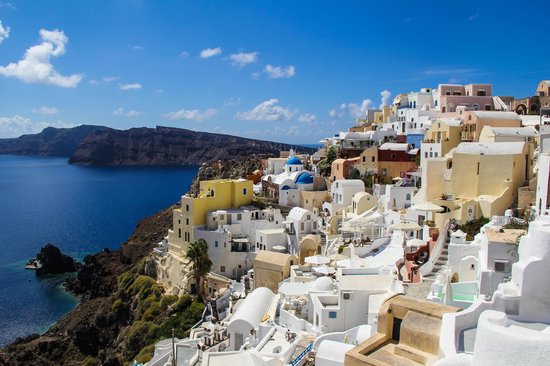
  • Santorini:The Greek island of Santorini, which is the result of volcanic eruptions have created spectacular landscapes. Typical of the Cyclades island of Santorini is the white houses with blue windows, built on steep slopes. One of the most spectacular sights is the dormant volcano and the excavations in the ruins of old Kammena, where visitors can admire the ancient Greek history. The tourists have the opportunity to walk among the inactive craters and enjoy the view of other Cycladic islands. The magical landscape of Santorini is number one destination for couples.

'Worshipping Women: Ritual and Reality in Classical Athens' in National Archaeological Museum of Athens

An impressive exhibition titled "Worshipping Women: Ritual and Reality in Classical Athens" was inaugurated at the National Archaeological Museum of Athens by President of the Republic Karolos Papoulias on Monday night, in a ceremony also attended by culture minister Antonis Samaras.

The exhibition, through the 172 rare and extraordinary archaeological artefacts on display that are divided into five sections, explores the manifold ways in which women’s religious worship contributed not only to personal fulfillment, but also to the civic identity of the leading city of the Classical Greek world.

The first section of the exhibition introduces the principal of "Female Deities" of Athens and Attika, in whose cults and festivals women were most actively engaged: Athena, Artemis, Aphrodite, Demeter and her daughter Persephone. In between goddesses and mortals was a small group of heroines -explored in the next section-, women who were believed to have lived in the distant past and after their deaths became figures of cult worship.

The exhibition then enters the world of "Priestesses", historical and mythological, and looks at their visual iconography focusing on their principal attribute, the large temple key.

The several kinds of "Ritual Acts", some that apply universally to all cults and others that were specific to the worship of a particular divinity, are presented in the third section.

The fourth section deals with the participation of women in major religious "Feasts", such as the Panathenaia, or in strictly women’s feasts, such as Adonia or Thesmoforia.

The fifth and final section focuses on the "Life-Cycle" of Athenian women, from birth to death, highlighting certain key moments of transition and the role of ritual in each of these.

The exhibition, through the study of religion seeks to correct the unremittingly bleak picture that the lives of Athenian women were highly restricted when it came to public sphere and participation in the political process.

Women’s involvement in cults and festivals, whether alongside men or separate from them, was as essential for the successful functioning of the "polis" as that of any member of society.

The exhibition which will be on display through November 30, is part of a series of celebrations planned for the 180th anniversary since the Museum's founding and the 120th anniversary of its inauguration at its current premises on Patission street.

It is organised in collaboration with the Alexander S. Onassis Public Benefit Foundation, and had previously been on display at the Foundation's Onassis Cultural Center in New York from December 2008 to May 2009.

Thursday, July 9, 2009

Kalamata International Dance Festival 16-27 July 2009


The Kalamata International Dance Festival is the key event in the year of the city's International Dance Centre. The Centre was founded in the spring of 1995, charged with supporting and promoting the art of dance via research, education, and artistic activities and creativity.

After fifteen years as an active presence in the Greek dance scene, thanks to the support of the local authorities the Kalamata Festival has earned itself a special place on the festival map of the Mediterranean South, and built bridges to international dance creativity.

A number of influential figures, whose work is shaping the history of contemporary dance made their first Greek appearance at Kalamata, while the Festival has also taken care to promote and support Greek creativity in the field by commissioning works from talented Greek choreographers and supporting new companies in their experimental explorations.

Another integral part of the Festival are the seminars and talks aimed at dance students and professions alike, while other parallel events include publications and video dance productions.

From the very start, the Festival was programmed with two considerations in mind: the wide range of trends in contemporary dance and the ever-larger audiences this art-form attracts. Today, fifteen years down the line, every year sees a widely-varied audience enthusiastically respond to the call of the Festival.

Kalamata, the city of dance, is set to host its 15th annual programme of events between the 16th and 26th of July, 2009.

The Festival is funded by the Ministry of Culture and the Municipality of Kalamata.